<!DOCTYPE html>
How to Tell if Your Air Conditioner Compressor is Failing | Day & Night Air Conditioning, Heating, & Plumbing
Body font-family: Arial, Helvetica, sans-serif; line-height: 1.6; color:#1b1b1b; background:#f7f7f7; margin:0; padding:0;
.box max-width: 980px; margin: 24px auto; background:#fff; border:1px solid #ddd; border-radius:8px; box-shadow:0 2px 10px rgba(0,0,0,.05); overflow:hidden;
Header, section, footer padding: 20px 24px;Header background:#0b3d91; color:#fff;
Header h1 margin:0 0 6px 0; font-size: 26px;Header p margin:0; color: #d8e2f1;
H2 font-size: 22px; margin-top: 18px;H3 font-size: 18px; margin-top: 16px;
P margin: 10px 0;.callout background:#eef6ff; border:1px solid #cde2ff; padding:12px 14px; border-radius:6px;
.list background:#fcfcfc; border:1px solid #eee; padding:12px 16px; border-radius:6px; margin: 12px 0;.cta background:#0b3d91; color:#fff; border-top:1px solid #06285e;
.cta a color:#fff; text-decoration: underline;.grid display:grid; gap:16px;
@media(min-width: 780px) .grid-2 grid-template-columns: 1fr 1fr;.badge display:inline-block; background:#e9f5ec; color:#2b7a3f; padding:4px 8px; border-radius:4px; font-size: 13px; margin-right:6px;
.brand-row display:flex; flex-wrap: wrap; gap:8px; margin:8px 0;.brand border:1px solid #eee; padding:6px 10px; border-radius:4px; background:#fafafa; font-size: 13px;
.note font-size: 13px; color:#666;.coupon background:#fff3cd; border:1px dashed #e0b800; padding:12px; border-radius:6px; margin-top:8px; color:#5b4a00;
How to Tell if Your Air Conditioner Compressor is Failing
Local field insight for Phoenix, AZ homeowners and facility managers by Day & Night Air Conditioning, Heating, & Plumbing — NATE-certified, 24/7 emergency AC repair across Maricopa County.
Phoenix heat is brutal on compressors. When the thermometer hits 110°F during a July stretch, the HVAC compressor handles extreme workload and high head pressure. Early detection prevents a full burnout, protects the condenser coil, and keeps energy bills in check. This article explains the symptoms, field tests, and local factors that push compressors over the edge in Phoenix neighborhoods from Desert Ridge to Arcadia.
Why the compressor fails sooner in Phoenix
The compressor is the heart of every central air conditioner, heat pump, package unit, and rooftop unit. It pressurizes the refrigerant and drives heat rejection through the condenser coil. In Phoenix, several forces accelerate wear. Asphalt and concrete reflect heat onto outdoor units. Dust and monsoon debris clog fins and restrict airflow. Rooftop installations see hotter ambient air compared to shaded ground installs. Those conditions elevate head pressure and motor amperage. Bearings, windings, and valves face higher stress, especially on older R-22 and early R-410A systems.
Homeowners in Arcadia or Biltmore with mature shade trees may get slightly cooler microclimates, but clogged MERV filters or closed registers still raise suction pressure and cause liquid floodback during shoulder seasons. In Ahwatukee Foothills and South Mountain, rooftop package units sit above tile roofs that radiate heat into the evening. If the start capacitor drifts out of spec, the compressor struggles to start during peak-load restarts and can lock up. Under those conditions, short cycling becomes common, and thermal overload trips are frequent.
Common symptoms of a failing HVAC compressor
Most Phoenix calls labeled as “AC blowing warm air” or “unit won’t start” trace back to a cluster of issues around the compressor circuit. These are the red flags technicians look for on residential split systems, ductless mini-splits, and commercial RTUs near Chase Field, Footprint Center, and Papago Park.
AC blows warm air after a normal start
If the fan runs but supply air stays room temperature or warm, the compressor may not be pumping. A failed run capacitor, a bad contactor, or a seized scroll are frequent causes. Technicians confirm by checking line set temperatures and measuring suction and discharge pressures. If discharge is near ambient with the unit “on,” the pump action has failed. This is common on aging central air conditioners in 85018 and 85016.
Hard starts and clicking on restart
A healthy compressor starts without drama. Repeated clicks or buzzing points to a weak start capacitor, a low-voltage supply issue, or worn internal components. In North Phoenix zip codes like 85032 and 85050, where many systems sit in direct sun, overheated capacitors fail mid-summer. A NATE-certified technician confirms with microfarad readings and an amperage draw test on startup.
Breaker trips during peak heat
High ambient temperatures in Paradise Valley Village or Desert Ridge produce high condensing temperatures. If condenser fins are dirty or airflow is poor, amperage climbs and the breaker trips. This can indicate a compressor struggling against excessive head pressure, or a winding short starting to develop. Frequent trips damage the contactor and can carbonize relay switches in the air handler.
Humming at the outdoor unit with the fan spinning
A steady hum with no cold air often points to a locked compressor rotor or a failed run capacitor. The contactor may pull in, but the compressor fails to turn. Left like this, windings overheat and the internal thermal overload opens. In Maryvale and Sunnyslope, dust infiltration magnifies this problem by raising motor temperatures.
Short cycling without thermostat changes
Short cycling wastes energy and beats up the compressor. Root causes include low refrigerant charge from a small R-410A leak, a restricted TXV (expansion valve), overheating due to a dirty condenser coil, or a thermostat malfunction. Copper refrigerant lines with ice near the evaporator coil are a clear signal that charge or airflow is off. Letting this continue risks liquid refrigerant returning to the compressor, which destroys valves and causes early failure.
Field checks a homeowner can do before calling for AC repair
Some safe observations help narrow the problem and speed repair. Keep it simple and avoid opening electrical panels or refrigerant circuits. Phoenix homes with rooftop units should use caution and avoid climbing without proper safety gear.
Quick self-check list
- Verify the thermostat is on Cool and set below room temperature. Switch the fan to Auto.
- Check the breaker and the outdoor service disconnect. Reset once if tripped, then watch for a repeat trip.
- Replace or clean the return air filter. A clogged MERV filter can freeze the evaporator coil.
- Listen at the outdoor unit. Is the fan spinning? Is there a loud buzz or clicking without the compressor starting?
- Look at the copper lines near the air handler. Ice or heavy sweating suggests airflow restriction or low charge.
If you smell electrical burning, hear arcing, or the breaker trips again, shut it down and call for emergency air conditioning repair near you.
How pros diagnose compressor health in Phoenix conditions
Experienced technicians in Phoenix rely on measurements. Visual clues matter, but numbers settle the diagnosis. A complete workup covers the entire refrigeration circuit and supporting controls, because many “compressor failures” start as external problems.
Electrical testing and start circuit verification
Technicians test the start and run capacitors under load, confirm contactor integrity, and check voltage drop during startup. A clamp meter verifies locked rotor amps versus nameplate LRA. Excessive LRA readings with a weak capacitor show why the motor stalls. If the unit shows irregular voltage from the panel during peak load hours, a dedicated circuit check is in order for older homes in 85021.
Refrigerant pressures and superheat/subcooling
Measuring suction and discharge pressure tells the story. Low suction with normal discharge points to a starved evaporator or TXV restriction. High suction and high discharge together indicate airflow issues or overcharge. Proper subcooling and superheat values confirm charge and metering. If values swing wildly, the compressor valves may be leaking internally, which reduces pumping efficiency and raises run time across 110°F days.
Temperature differential and line set inspection
A stable temperature drop across the evaporator coil in the 16°F to 22°F range is typical with clean filters and proper charge. Sluggish Delta T after a filter change pushes suspicion back to the compressor or the TXV. The tech inspects copper line insulation, flare joints on ductless mini-splits, and brazed fittings on split systems for oil staining that signals leaks. Rooftop units near the Arizona State Capitol and downtown often show UV degradation on insulation, which pulls heat into the suction line and skews readings.
Mechanical condition and noise analysis
Scroll compressors produce a steady tone when healthy. Rattling during start, high-frequency squeal, or grinding means mechanical damage. A squealing fan motor at the condenser can mask compressor sounds, so the motor is checked first. If the fan motor bearings fail, head pressure shoots up and the compressor overheats. Thermal imaging finds hot spots on the shell and helps confirm internal stress.
How related faults can mimic a compressor failure
Many Phoenix service calls begin as “bad compressor” but end as a different fix. This protects budgets and gets faster results. Here are frequent impostors the Day & Night team sees from Paradise Valley to Glendale.
Failed start capacitor or contactor
Capacitors drift out of spec under heat. Contactors pit and stick. The compressor never receives the right start torque. Replacing these parts often brings the system back to life. Day & Night trucks carry heavy-duty start capacitors and universal contactors to fix many units on the first visit, which matters during July and August when parts houses run low.
Low charge from a small R-410A leak
A slow refrigerant leak freezes the evaporator coil and triggers short cycling. The compressor overheats trying to compensate. After leak detection and repair, proper charge often restores performance. Skipping the leak repair and “just topping off” turns into repeat failure and higher costs. In Biltmore condos with tight mechanical closets, condensate backups also create freeze-thaw cycles that stress the system.
Clogged condenser coil or blocked airflow
Desert dust and cottonwood fluff choke fins and trap heat. Without full airflow across the condenser coil, discharge pressure climbs, and the compressor runs at higher amps. A deep coil cleaning reduces head pressure and protects the motor windings. Rooftop units on arcades near Camelback Mountain need extra attention after windy days.
Thermostat and control board issues
A miswired thermostat, a failing relay switch, or a bad defrost board on heat pumps can shut down the compressor call. Controls fail from heat soak in attic air handlers common in 85048 and 85044. Verifying low-voltage signals prevents an unnecessary compressor replacement.
What damage looks like when the compressor is truly failing
When a compressor reaches end-of-life, symptoms move from nuisance to obvious failure. The equipment history helps. Systems past 12 to 15 years under Phoenix load are candidates for replacement if the compressor dies. These markers are conclusive.
Grounded or shorted windings
Megohm testing shows winding insulation failure. The breaker trips instantly, sometimes with a pop at the contactor. Acid tests on the oil may show contamination. In this case, the entire refrigerant circuit needs cleanup, filter-drier replacement, and a new compressor or full condenser swap.
Seized or locked rotor
Locked rotor amps spike every start attempt. A hard start kit might nudge a start, but the root damage remains. Continuing to try risks a burnt smell, discolored wiring, and contactor damage. Responsible technicians advise replacement or a full system consult at this stage.
Valve failure and low differential pressure
If suction and discharge pressures collapse toward each other while running, the internal valves are leaking. Cooling output plummets. Energy bills rise in 85085 and 85050 where homes often have large west exposures and demand longer run times. Repair means compressor replacement.
Appliance types and Phoenix-specific quirks
Compressor issues show up differently across system types common in Phoenix. Understanding these differences saves time during diagnosis and helps with the repair decision.
Split-system central air conditioners
This is the most common setup in Arcadia, Biltmore, and North Mountain. Outdoor condensing units face radiant heat and dust. Indoor air handlers in attics run hot. Wire insulation hardens, relay switches age faster, and TXVs stick. A staged cleaning and refrigerant performance check each spring reduces compressor stress.
Heat pumps
Heat pumps add reversing valves and defrost controls. In winter, low ambient issues reveal weak compressors sooner. In summer, they behave like standard AC. Improper defrost or a sticking reversing valve can mimic compressor failure. Many Phoenix homes use high-efficiency heat pumps for better winter performance without a gas furnace.
Ductless mini-splits
Mitsubishi Electric and Daikin units use inverter-driven compressors that modulate capacity. Failures appear as fault codes or reduced capacity rather than a hard stop. Accurate board diagnostics and pressure transducer readings are essential. North Phoenix sunrooms often benefit from these systems for zone control.
Package units and rooftop units (RTUs)
Rheem, Trane, Carrier, and York RTUs serve many Phoenix homes and small commercial buildings near Phoenix Sky Harbor International Airport and downtown. Rooftop placement leads to higher ambient temperature and wind-driven debris. Service access is harder, which delays maintenance. Compressors in these units respond well to scheduled coil cleaning and proactive capacitor replacement before peak season.
Repair or replace: a grounded Phoenix look at costs and outcomes
Compressor replacement is a major decision. On systems under warranty, replacing the compressor with OEM parts preserves SEER ratings and keeps coverage intact. On older units, replacing the entire condenser or considering a matched system may make better sense. The city’s heat shifts the math because high head pressure reduces efficiency on aging equipment, so the savings from a new high-SEER system are substantial during 115°F weeks.
For a 10 to 12-year-old split system in Maryvale with a failed compressor and stained copper refrigerant lines, the risk of debris in the circuit is high. A responsible plan includes a liquid line drier, a suction line drier on first start, triple evacuation, and acid cleanup. That labor can approach the cost difference to a new condenser. On a five-year-old Goodman or Bryant with a clear failure and clean oil test, a compressor swap is practical. The Day & Night team guides these calls with actual measurements, not guesswork.
Maintenance that extends compressor life in Phoenix
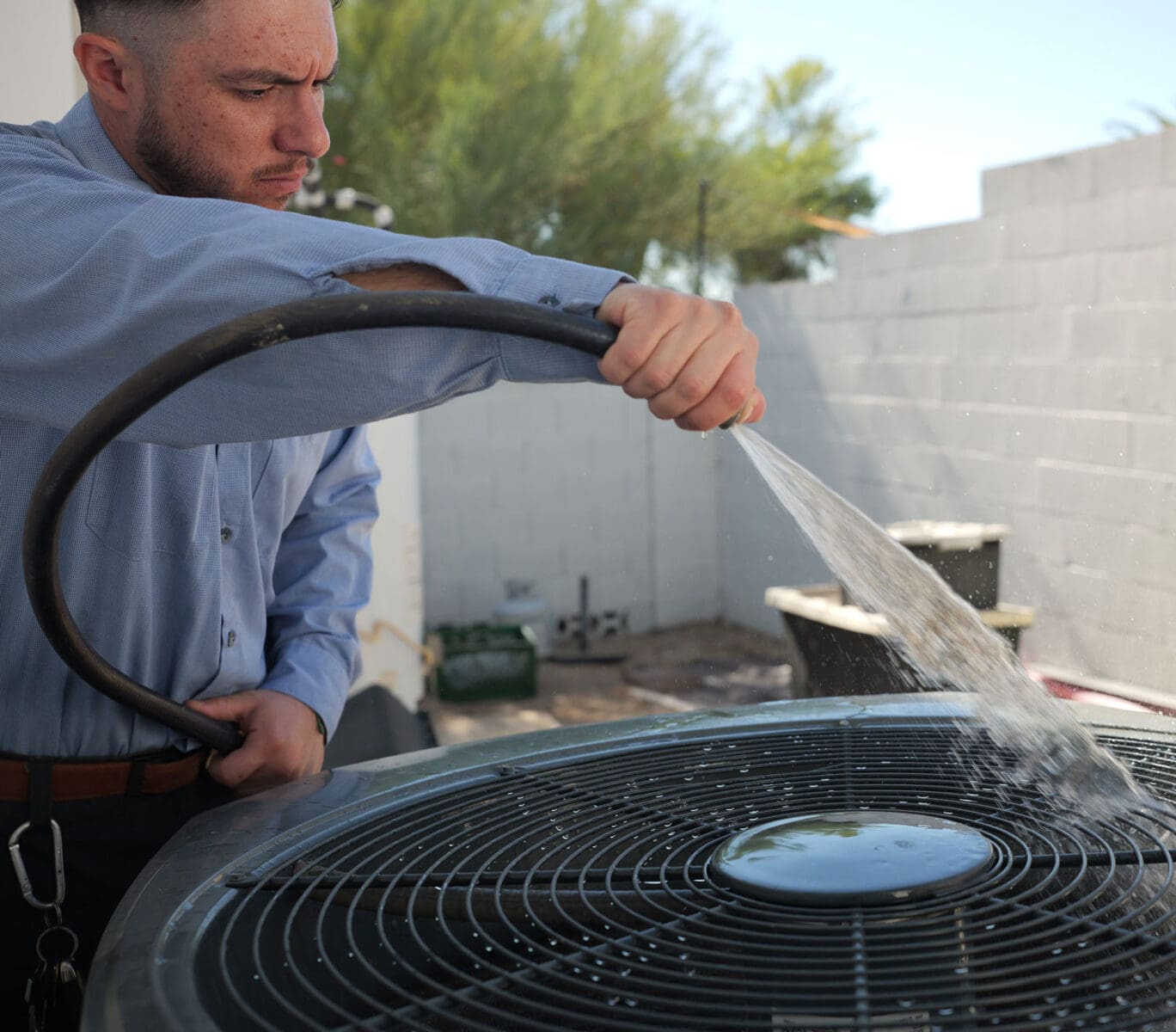
Preventive service is the easiest way to avoid emergency AC repair during a heat wave. It takes more than a rinse with a hose. Proper maintenance lowers head pressure, stabilizes amperage, and protects windings.
Coil cleaning and airflow restoration
Condenser coils collect dust and pollen fast in the Valley of the Sun. A deep chemical cleaning straightens and opens fins. Clearing yard debris and providing at least 18 inches of free air around the unit helps. On rooftops, installing hail guards and screens reduces future clogging. Indoors, the evaporator coil needs attention every few years, especially with pets or drywall dust.
Capacitor and contactor checks each spring
Heat degrades capacitors in one to three summers. Measuring microfarads and replacing weak parts before June prevents hard starts. Contactors with pitted points cause overheating. Swapping them under maintenance budgets is cheaper than risking a mid-July outage.
Refrigerant performance verification
A quick pressure check without data is incomplete. Proper superheat and subcool numbers confirm healthy metering and charge. If the TXV sticks or the filter-drier restricts, head pressure climbs and the compressor works harder. Small course corrections in April protect equipment in August.
Drain line service
Clogged condensate lines trigger float switches that shut down cooling. When systems cycle off due to a safety, the compressor starts and stops more than it should. Clearing the drain line and improving traps protects the motor and prevents flooded ceilings in older 85018 homes with plaster.
Brands, parts availability, and warranty protection
Day & Night services every major brand across Phoenix, including Trane, Carrier, Lennox, Goodman, Rheem, York, Bryant, American Standard, Daikin, and Mitsubishi Electric. Factory procedures matter in high heat. Using genuine OEM parts on in-warranty repairs protects ratings and avoids callbacks. Where supply chains tighten in peak summer, our warehouse and stocked fleet shorten downtime across the Maricopa County corridor.
Carrier
LennoxGoodman
RheemYork
BryantAmerican Standard
DaikinMitsubishi Electric
For high-end rooms with glass exposure in North Phoenix and Desert Ridge, a Mitsubishi ductless mini-split provides precise cooling and reduces runtime on the primary system. In older Arcadia homes with limited attic space, a Carrier rooftop package unit offers compact performance with service access for our team.
Where Day & Night responds fastest in Phoenix
Response time matters during a compressor failure. Day & Night deploys 24/7 emergency AC service throughout Phoenix zip codes including 85001, 85016, 85018, 85021, 85032, 85044, 85048, 85050, and 85085. Crews handle commercial and residential calls near Camelback Mountain, Heard Museum, Chase Field, and Papago Park. Homeowners in Ahwatukee Foothills, Arcadia, Biltmore, Desert Ridge, North Mountain, Paradise Valley Village, Maryvale, South Mountain, and Sunnyslope get priority routing during Excessive Heat Warnings. Neighboring coverage includes Scottsdale, Tempe, Mesa, Chandler, Glendale, Peoria, Gilbert, and Paradise Valley.
Searching for “ac repair Phoenix” or “emergency air conditioning repair near me” will show Day & Night in the local results and map pack. The dispatch center sends the nearest NATE-certified technician with a stocked truck.
What to do immediately if the system shows critical signs
Some symptoms risk permanent compressor damage or a safety incident. Shut the system down and request emergency service if any of these occur.
Shut it off and call if you notice
- Breaker trips twice in a row on startup or during the peak afternoon run.
- Burning plastic or electrical odor at the condenser or air handler.
- Heavy ice on the evaporator coil or the copper suction line.
- Loud grinding or metal-on-metal sounds from the outdoor unit.
- Smoke, arcing, or melted insulation on wires near the contactor.
Do not keep resetting the breaker. Repeated trips can escalate a repair into a full compressor or control board replacement.
A real Phoenix case: high head pressure on a rooftop unit
A North Mountain homeowner called for warm air late afternoon in August. The home used a 10-year-old 4-ton Trane rooftop package unit. Ambient rooftop temperature was 128°F, measured at the condenser intake. The system showed high head pressure and a shaky start. The start capacitor tested 20 percent low. The condenser coil was packed with dust behind a screen. After chemical coil cleaning, a capacitor replacement, and a contactor swap, discharge pressure dropped into range and supply air cooled to target. Energy usage dropped, and the compressor amp draw stabilized. The compressor survived, but another week of that load could have pushed it into failure. Timely service prevented a multi-thousand-dollar replacement.
What Day & Night does during a compressor-focused service call
Our diagnostic process aims to protect your investment and stop the cause, not just the symptom. The technician arrives in a uniform, explains the test plan, and documents readings so you can see the numbers behind the recommendation. During heat waves, we target same-day restoration wherever parts are available.
Key steps include a visual inspection of the condenser coil, a check of blower motor speed and airflow, run and start capacitor measurements, contactor condition, voltage drop, compressor amperage versus nameplate, pressure readings, superheat and subcool calculations, TXV evaluation, and a leak check if readings suggest loss of charge. Where parts are needed, our trucks are stocked with heavy-duty start capacitors and universal contactors to close the gap on a first-visit fix. If the compressor is truly failed, we review options: compressor-only replacement, matched condenser upgrade, or a full system plan suited to Phoenix loads.
Why Phoenix chooses Day & Night for AC repair
Day & Night Air Conditioning, Heating, & Plumbing is a licensed, bonded, and insured HVAC contractor in Arizona. ROC #133378. The company maintains NATE-certified technicians and an A+ BBB rating. The team supports both residential cooling solutions and commercial HVAC repair across the Valley. Same-day service is available, and 24/7 emergency AC repair runs through the hottest months and monsoon events. Fixed-price quotes remove surprises, and technicians are trained on Trane, Carrier, Lennox, Goodman, Rheem, York, Bryant, American Standard, Daikin, and Mitsubishi Electric systems.
For many homeowners, “ac repair Phoenix” means speed plus accuracy. The local crews understand high static pressure from restrictive ductwork in older 85018 remodels, how sandy backyards in Maryvale clog condenser fins, and how west-facing glass in Desert Ridge spikes load after 4 p.m. These local patterns shape both the diagnosis and the repair plan so the fix lasts.
$50 off AC repair coupon available for first-time customers on approved services. Ask during scheduling. Cannot combine with other offers.
Frequently asked Phoenix questions about failing compressors
Is it okay to run the AC if the compressor is failing?
Not recommended. Running on a failing compressor worsens damage, risks a grounded winding, and can send debris into the refrigerant circuit. Shut it down and schedule service.
How do I know if the thermostat is the problem instead?
If the condenser never engages and the fan runs inside, a wiring or thermostat fault is possible. Confirm Cool mode, setpoint below room temperature, and fan on Auto. A quick meter check by a tech settles it.
Can a hard start kit save a failing compressor?
A hard start kit helps a good compressor with high LRA get turning in extreme heat. It does not fix worn bearings or damaged valves. It is a bridge, not a cure.
Why does the breaker trip during the hottest part of the day?
High ambient heat increases head pressure and amperage. A weak capacitor, dirty condenser coil, or failing fan motor pushes it over the edge. Correct the cause to stop the trips.
Does maintenance really make a difference in Phoenix?
Yes. Clean coils, correct charge, strong capacitors, and solid contactors lower stress. The payoff is fewer summer breakdowns and a longer compressor life in our desert climate.
Day & Night Air Conditioning, Heating & Plumbing 3669 E La Salle St,
Phoenix, AZ 85040 (602) 584-7758 www.dayandnightair.com AZ Licenses: ROC335883 | ROC335884 Google Maps | Facebook | Instagram | LinkedIn